Ground Zero of Sudan’s Camel Trade
Canadian Photographer Matt Reichel documents Khartoum’s Omdurman Camel Market, where hundreds of thousands of animals are moved each year across desert routes to Egypt and the Gulf, underpinning Sudan’s pastoral economy despite conflict and drought.
A recently sold camel has just been strapped into a harness connected to a forklift by the man in the foreground. The camel will be loaded into a truck and shipped across the Sahara to Cairo. The camels react strongly to being tied up and lifted, as if they know somehow that this is the beginning of the end for them.
A cargo truck loaded with sacks of food, fuel drums, and household goods pulls away from the Omdurman camel market, heading west toward Darfur. Many traders and herders return on the same vehicles they arrived on, carrying supplies purchased with proceeds from camel sales. For weeks or months at a time, this market functions as a vital exchange point: camels move east toward urban and export buyers, while manufactured goods, staples, and cash flow back into pastoral regions that remain largely roadless and underserved.
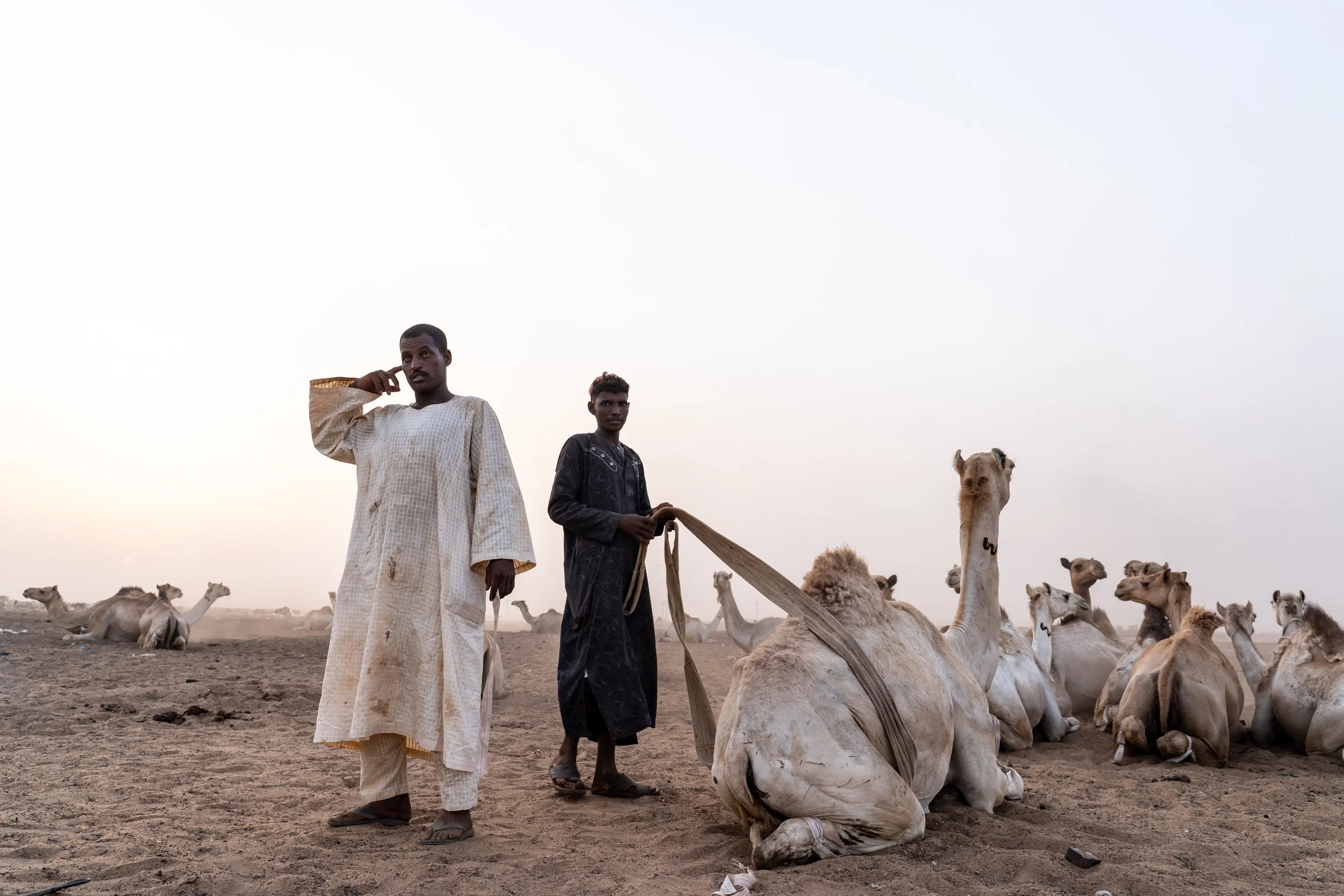
Young labourers prepare a camel for mechanical lifting by securing a belt around its body. Once attached to a forklift, the animal can be lifted and guided into position for transport. The practice is widely used in Omdurman, where manual handling alone would be impractical given the size of the animals and the density of people, trucks, and livestock moving through the market.
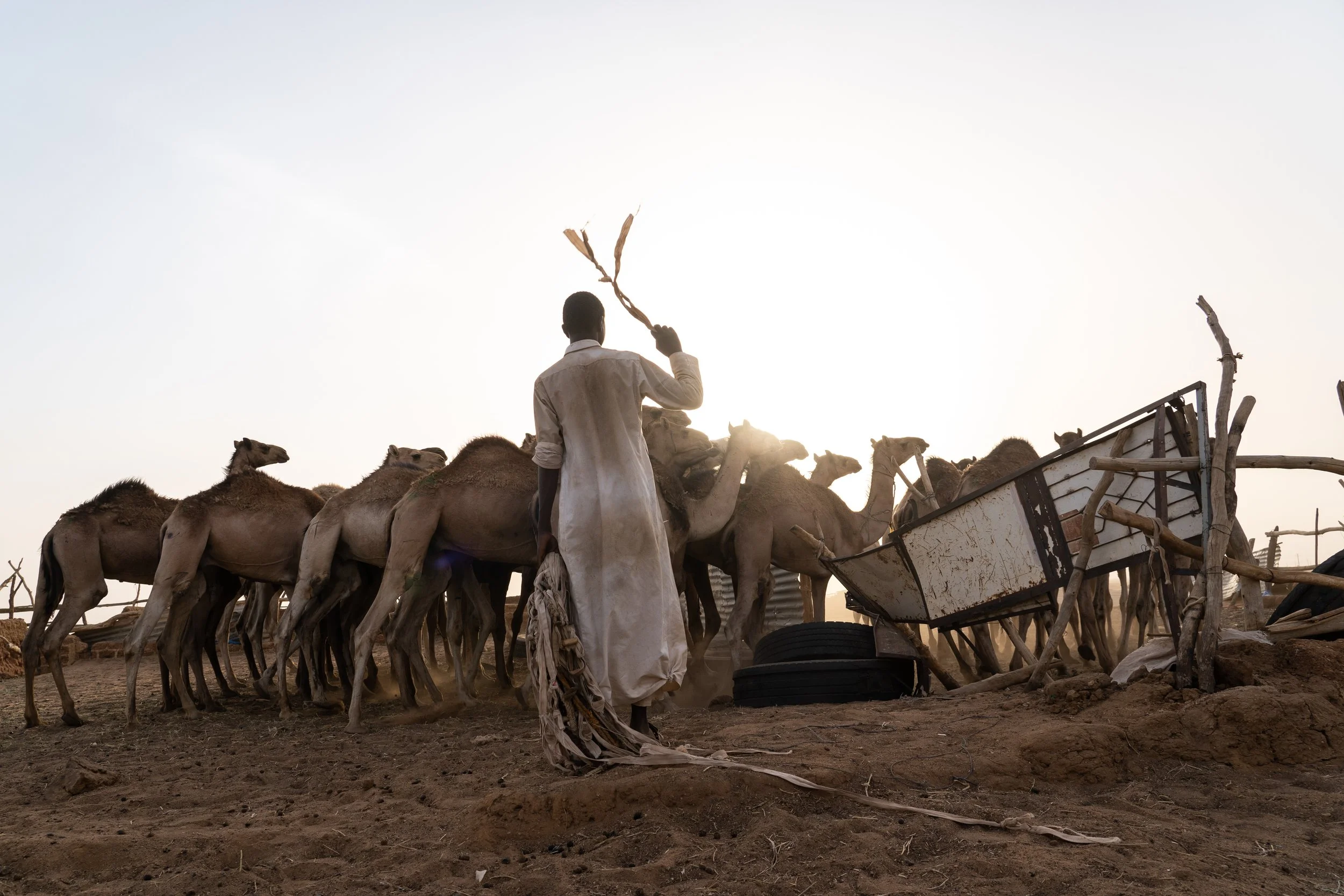
A young labourer pushes camels into a holding pen constructed from rope, scrap wood, and metal fencing. In Sudan’s largest livestock market, this kind of work is typically done by youths who lack capital, livestock, or trading connections of their own. Their role is essential but precarious: they handle risk and physical danger while remaining largely invisible within the profit structure of the camel trade.
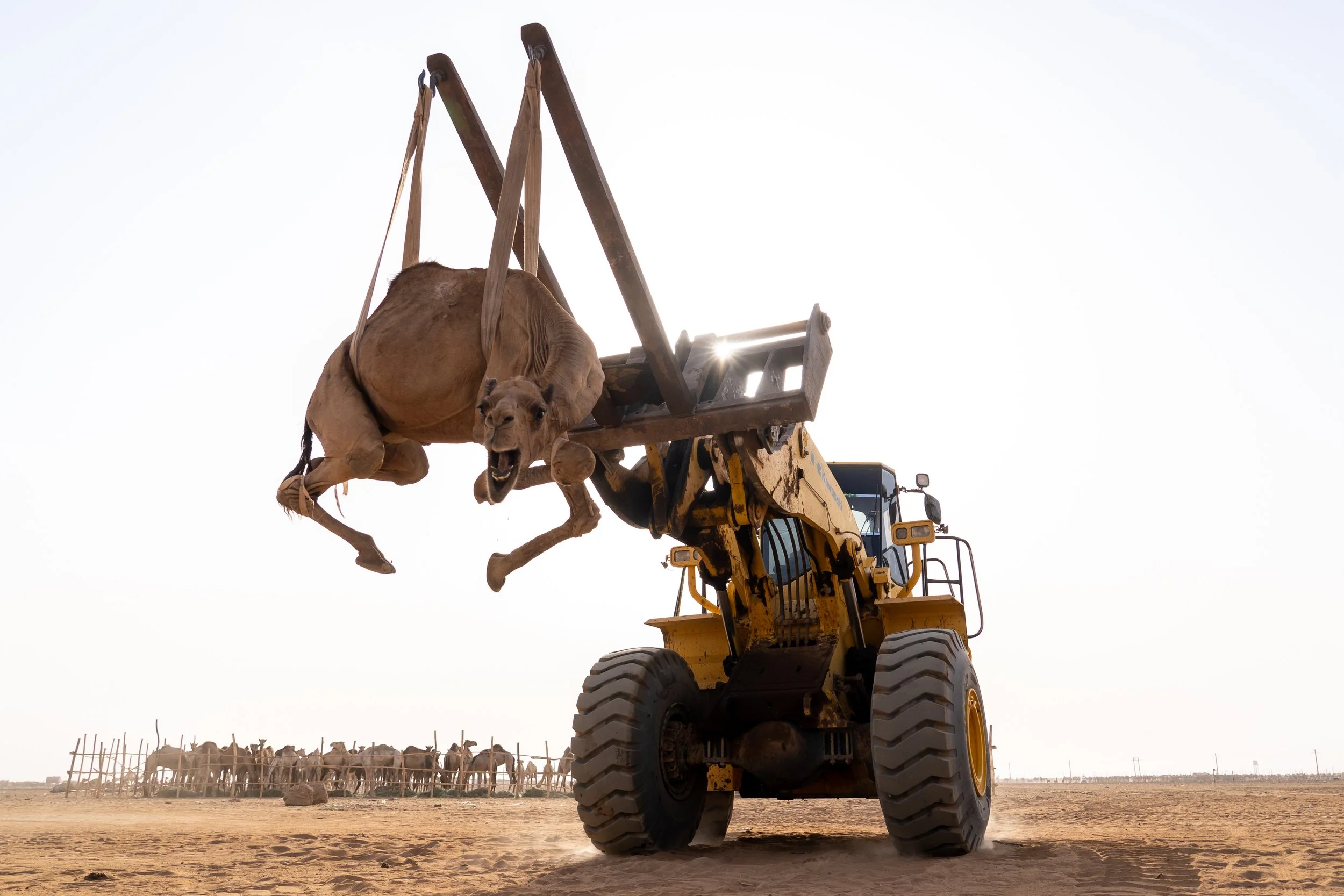
Lifted briefly off the ground by a forklift, a camel calls out during loading. The belt-and-fork method allows a small team to move animals quickly and limits direct physical contact between handlers and camels, reducing the risk of injury in crowded conditions. Several camels wait behind, already sorted and prepared for transport, indicating the volume and tempo of daily departures.
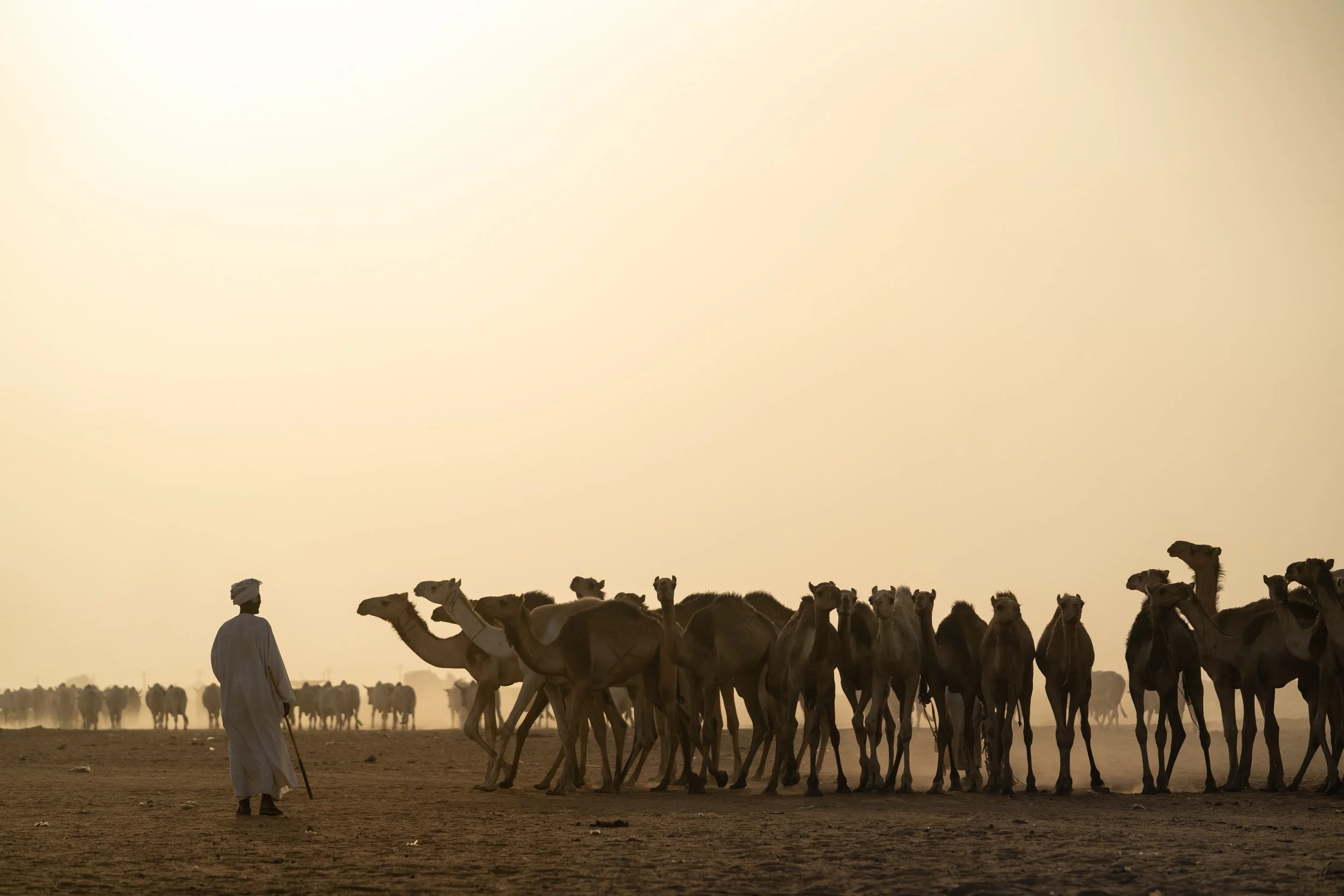
A camel herder leads his animals across the market grounds through heavy dust haze. In Summer, daytime temperatures routinely reach around 43°C (109°F), and constant movement of livestock, trucks, and people suspends fine sand in the air. The heat and reduced visibility slow movement, increase dehydration risk, and shape the pace at which animals can be handled and transported.
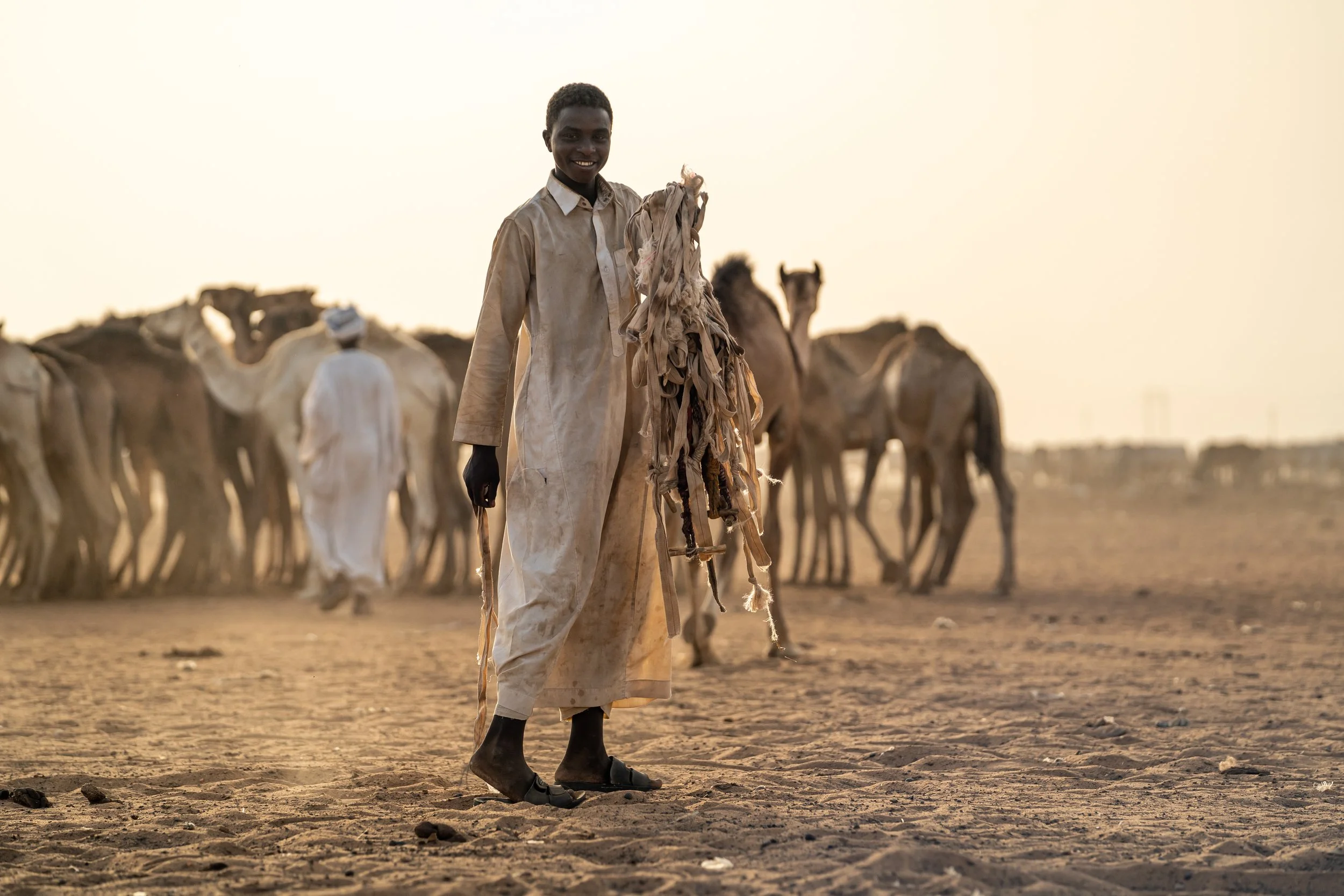
A young man retrieves fabric ties left behind after camels are secured in a temporary pen. The work follows the movement of animals through the market and includes herding, restraining, and clearing materials for reuse. This kind of labor is typically assigned to the youngest and least-established workers, whose earnings depend on availability of work rather than ownership or trade connections.
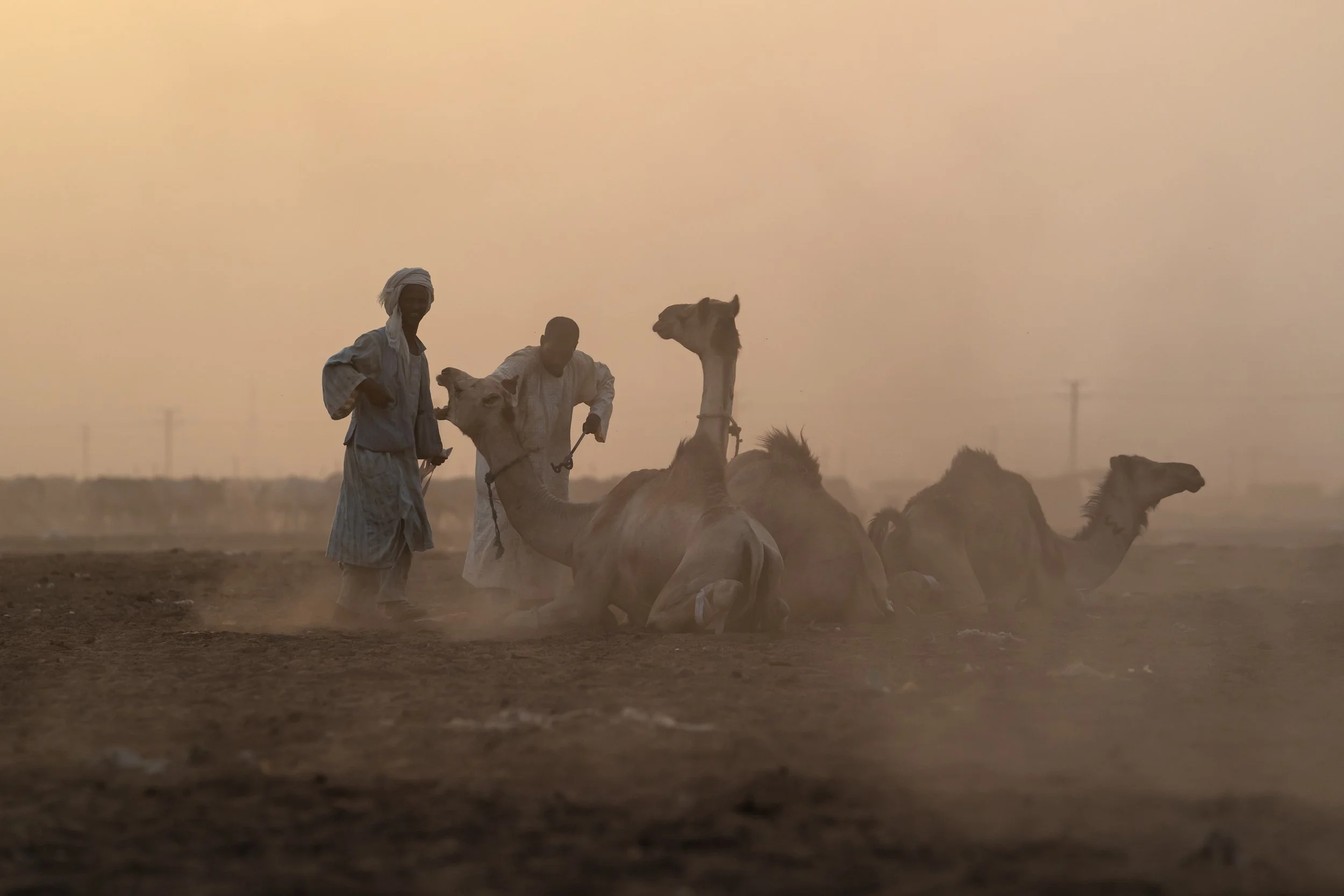
Two workers pursue camels that broke free from their group and ran across open ground. After a prolonged chase, the animals were restrained and forced to lie down, a standard method used to regain control of large camels once they are exhausted. The struggle kicked up heavy clouds of sand, reducing visibility and complicating coordination between handlers.
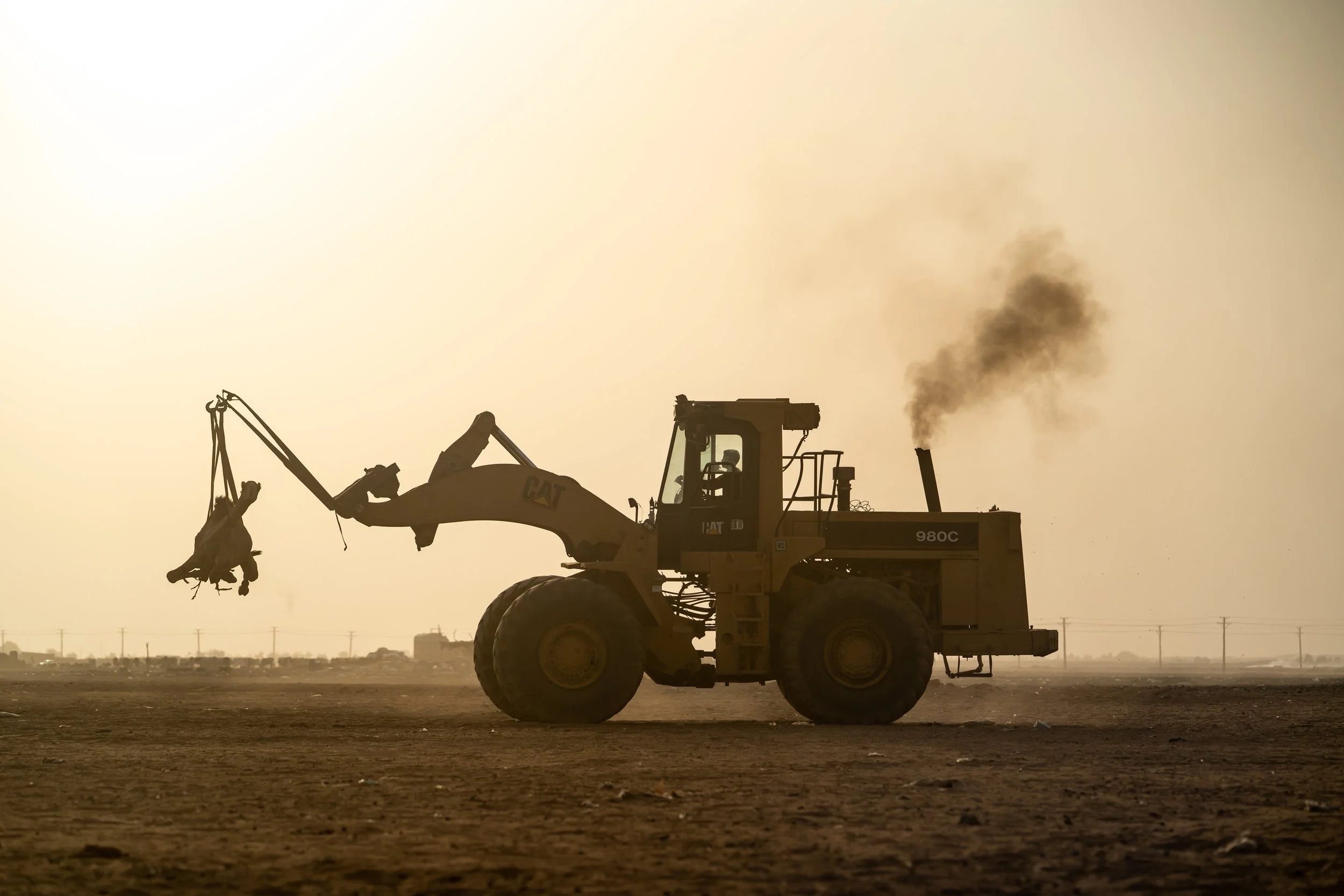
Silhouetted against dust and heat haze, a camel is hoisted by heavy machinery for loading. Industrial equipment is routinely used to move animals that are too large or resistant to handle manually. Exhaust smoke, airborne sand, and fading light collapse animal, machine, and landscape into a single working system shaped by speed, scale, and extreme conditions.
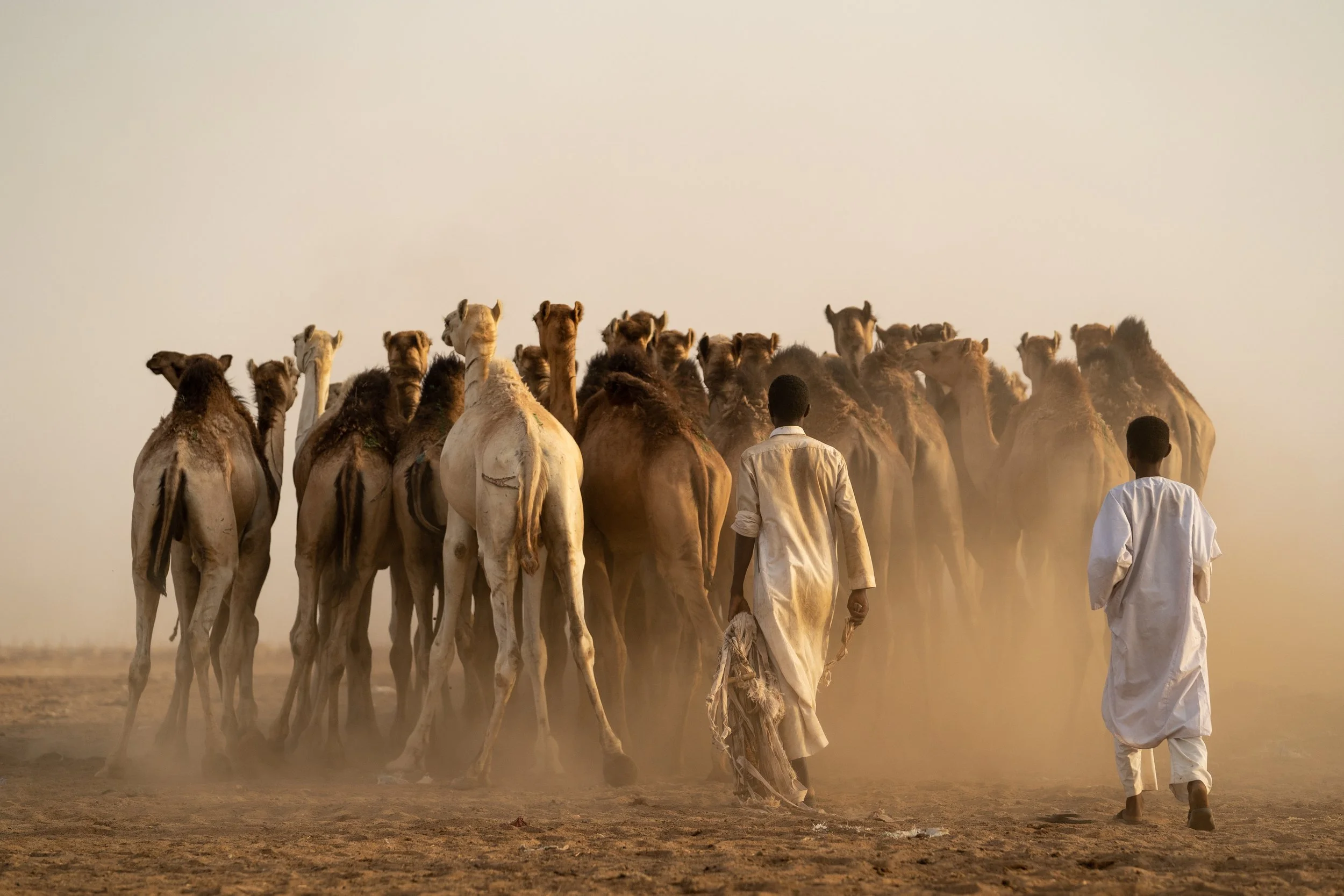
Younger boys walk behind a herd of camels while an older herder leads from the front. The rear position is typically assigned to younger or less-experienced handlers, whose role is to keep animals moving and prevent stragglers from breaking away. Age and experience determine positioning: senior herders control direction and pace, while youths manage pressure from behind.
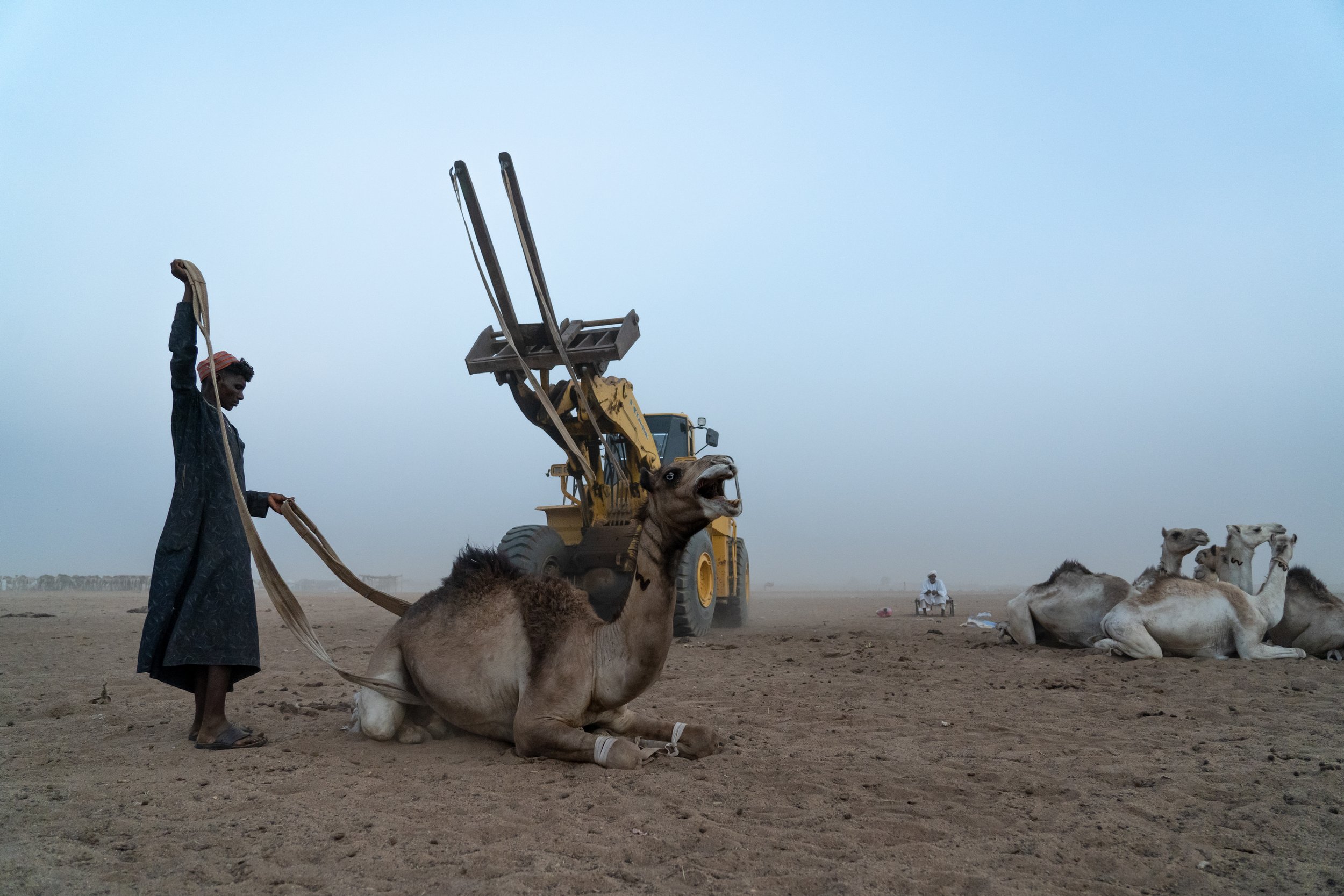
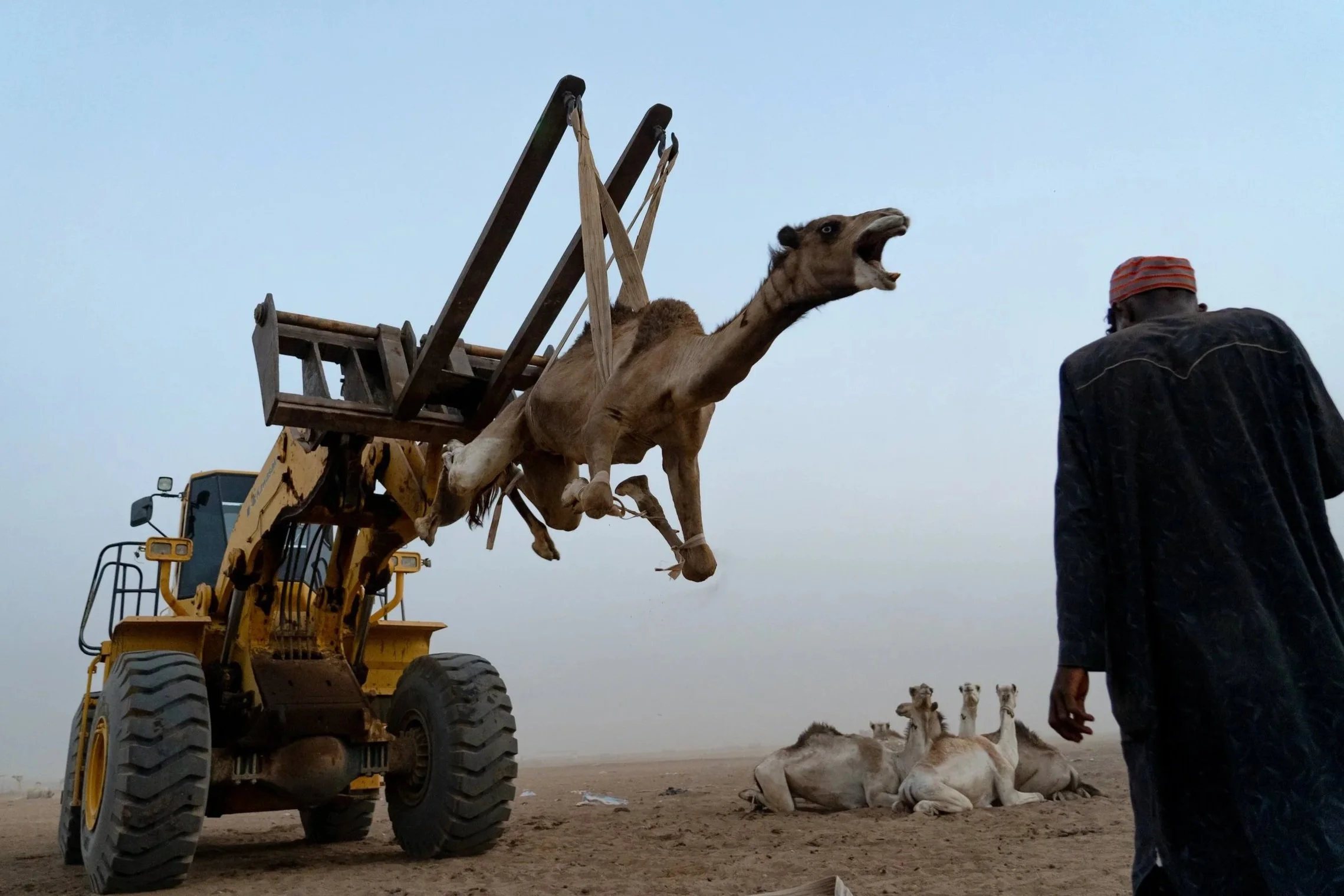
A camel’s eyes reflect the remaining blue-hour light as it waits during handling. In low-light conditions, camels’ large eyes and reflective tapetum enhance night vision, causing the eyes to appear unusually bright when illuminated against a darkening sky. Activity often continues into the night as temperatures drop and loading resumes after the worst daytime heat. Vendors come by offering tea and snacks, while camel handlers set up plastic tables and chairs in the sands.
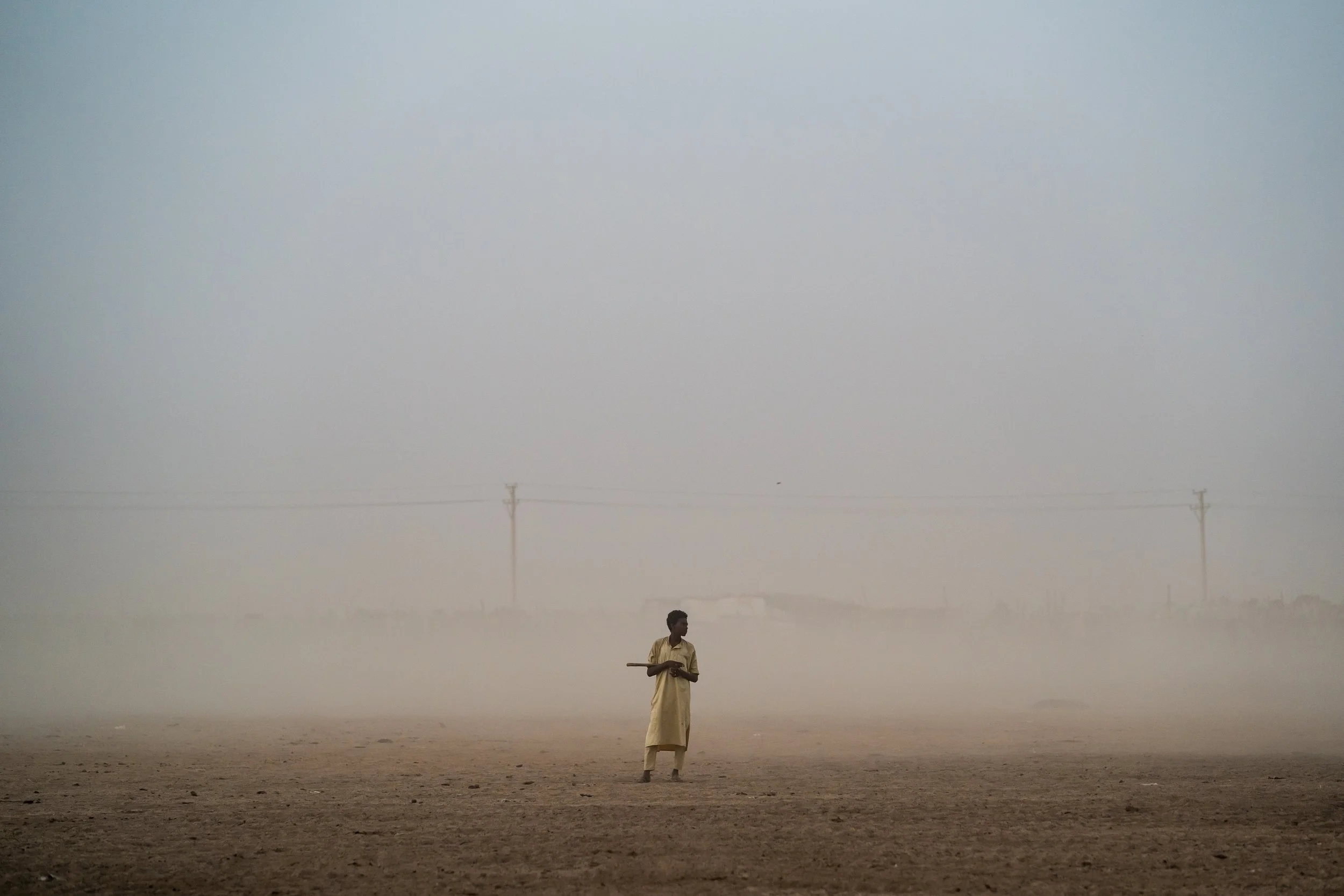
A young herder stands alone as dust hangs in the air at blue hour. Fine sand remains suspended long after herds and machinery pass, reducing visibility and coating skin and clothing. For younger workers, waiting and watching in these conditions is part of maintaining control over animals that may reappear suddenly through the haze.
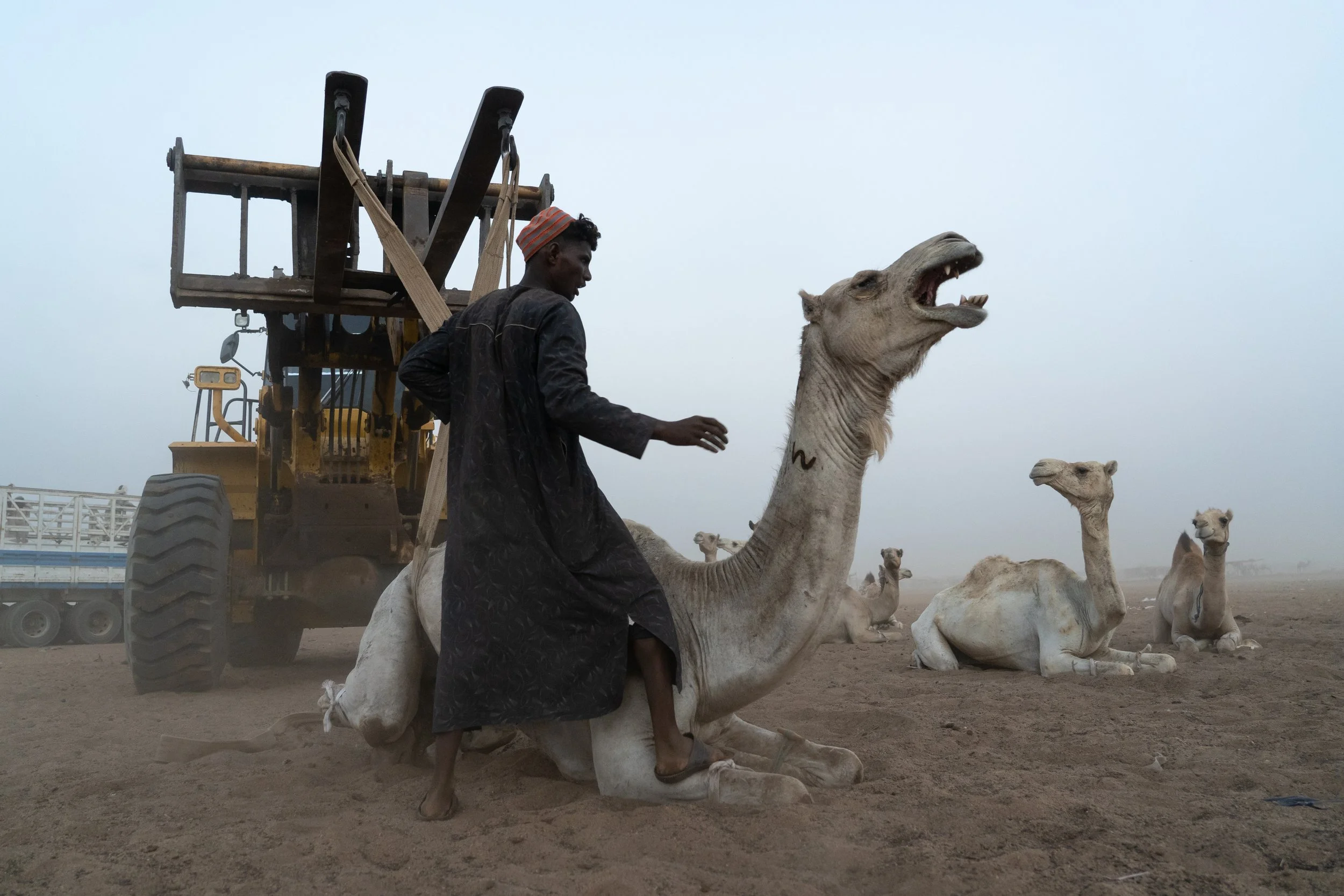
A handler stands over a camel that has been forced to kneel, positioning himself to keep the animal down while it vocalizes. Kneeling is a standard control technique used to immobilize camels during restraint, sorting, or preparation for loading. Behind them, a forklift fitted with fabric lifting straps waits, while other camels lie nearby, already subdued and staged for the next phase of handling.